Table of Contents
Introduction
Olaplex can be worth it, but only if you’re using it for the right problem. This guide breaks down when an in-salon Olaplex treatment genuinely makes a difference, which hair types benefit most, and whether you’re better booking it as a bolt-on to colour or as a stand-alone repair appointment.
Is Olaplex Worth It in a Salon? When It’s Actually Worth Paying For
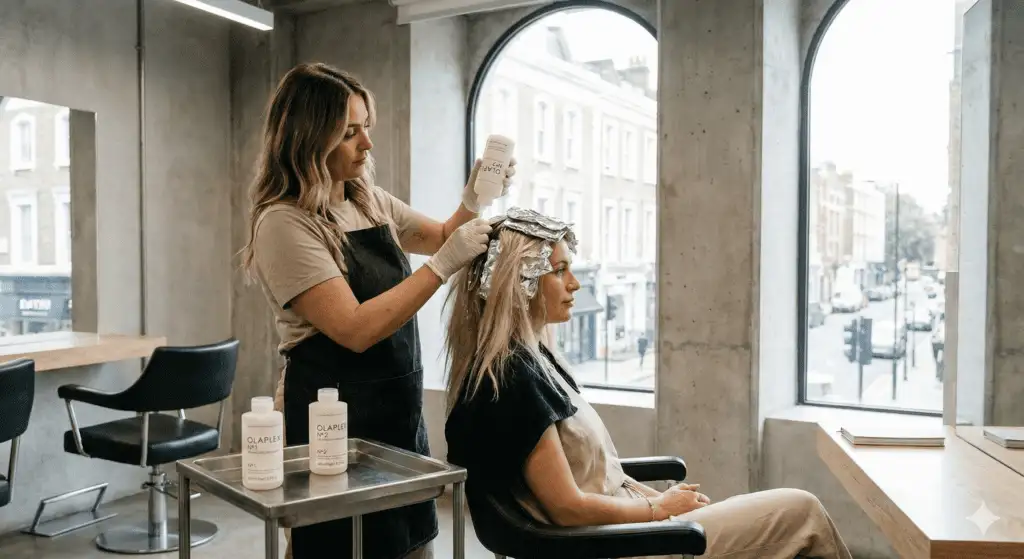
Let’s be honest: Olaplex isn’t magic. It won’t “fix” split ends, it won’t replace trims, and it won’t turn severely over-processed hair back into virgin hair overnight. What it can do, when used properly, is repair broken disulphide bonds inside the hair fibre so the hair feels stronger, looks smoother, and breaks less.
Olaplex is worth it in a salon when it matches the problem you’re trying to solve, and when it’s added at the right time in your appointment.
Olaplex is worth it in a salon when…
1) You’re colouring, bleaching, or lightening your hair
This is the best time to add it, because your hair is already going through a chemical process. If you’re investing in colour, skipping protection is a false economy.
Explore our women’s colour services and book your colour appointment.
2) You’re booking balayage or anything that pushes the hair harder
Balayage can be beautiful, but it’s still lightening, so this is where an Olaplex bolt-on earns its keep. It helps your hair hold up better in the weeks after your appointment, not just on the day.
See our balayage and ombré options and book Balayage + Toner + Olaplex.
3) You’ve got breakage, roughness, or that stretchy “compromised” feel
If your hair snaps when brushing, feels gummy when wet, or won’t hold style without looking frizzy, that’s when a strengthening treatment earns its keep. You’ll usually get more value from adding it to a service rather than chasing it as a random standalone fix.
4) You want softer, shinier hair, especially if you blow-dry or heat-style a lot
If your goal is manageability and a smoother finish, an in-salon treatment can make styling easier, and you’ll notice it most if you heat-style regularly.
5) You’re already coming in for a haircut and you want the “repair + refresh” combo
If your hair feels a bit tired but not destroyed, pairing a cut with a strengthening treatment makes sense, because the trim removes the worst ends and the treatment improves how the hair behaves.
Browse our women’s haircuts and styles and book Cut + Olaplex.
If you want the fastest “noticeable on the day” upgrade without committing to colour, you can also book Blowdry + Mask.

Olaplex is NOT worth it when…
1) Your main issue is dryness, not damage
If your hair feels rough or thirsty but it is not snapping, stretching, or shedding short broken bits, you probably need moisture and better conditioning habits more than bond-building. In that case, a good mask, a trim, and a smarter routine will usually give you more for your money than adding Olaplex “just in case”.
If you are coming in for a refresh anyway, pairing hydration with a cut is often the most noticeable upgrade, because the trim removes the oldest, most porous ends and your hair immediately looks and feels healthier. You can explore our women’s haircuts and styles here.
2) You’re expecting a one-visit transformation
If your hair is heavily bleached or repeatedly over-processed, think improvement and damage control, not “back to perfect”. A single appointment can make hair feel better, but the best results come from a plan, usually a bolt-on during colour services, plus the right maintenance at home.
If you regularly colour, lighten, or tone your hair, it makes more sense to add Olaplex to the appointment you are already paying for, rather than chasing it as a random standalone fix. Take a look at our women’s colour services or balayage and ombré options.
The simplest rule
- Booking colour, bleach, highlights, or balayage? Add Olaplex as a bolt-on. It’s the best time to protect the hair because it is already being chemically processed.
- Hair is breaking, stretchy, or feels “gummy” when wet? Book a stand-alone repair appointment, then maintain it properly.
- Hard water, swimmers, or heavy build-up? Consider a chelating or reset treatment first, then do repair once the hair is actually clean enough to respond.
If you’re not sure what you need, book your usual appointment and ask for an Olaplex recommendation during your consultation. It takes minutes to diagnose properly and stops you wasting money on the wrong option.
To get started, you can book your colour appointment or book Balayage + Toner + Olaplex.
Quick Answer: Which Olaplex Treatment Is Best for Your Hair Type?
If you want the fastest answer, choose the option that matches what you are booking and what your hair is doing right now.
Choose your path
1) You are booking colour, bleach, highlights, or a toner
Add an Olaplex bolt-on to the appointment, this is when it gives the best return because the hair is already being chemically processed.
Start by booking your colour appointment and explore the full menu on our women’s colour services page.
2) You are booking balayage, and you want the “all-in” package with Olaplex included
This is the easiest choice if you want balayage, toner, Olaplex, plus cut and blowdry in one appointment.
You can book the Balayage + Toner + Olaplex package (from £270), or browse options on our balayage and ombré page.
3) Your hair is breaking, stretchy, or feels weak, and you are not colouring today
Go for a strengthening treatment alongside a cut, this is usually the most noticeable “repair + refresh” combo because the trim removes the worst ends and the treatment improves how the hair behaves.
You can book Cut + Olaplex (from £95) and see our women’s haircuts and styles for the full service list.
4) You want softer, shinier hair, and a better blowdry finish
If the goal is manageability and a smoother finish, this is the simple upgrade.
You can book Blowdry + Olaplex Moisture Mask (from £55).
5) You are not sure what you need
Do not guess. Start with a consult, it stops you wasting money on the wrong option.
You can book a colour consultation.
What Olaplex Does (and What It Doesn’t Do)
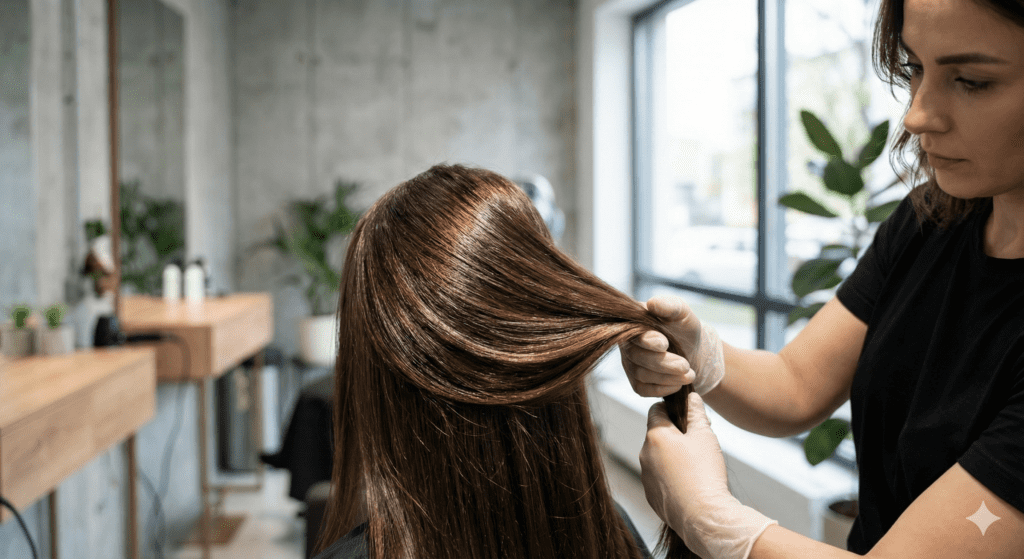
Olaplex is best thought of as a damage-management tool, not a magic “make hair perfect” product. When it’s used for the right reason, it can noticeably improve how the hair feels and behaves. When it’s used for the wrong reason, it’s an unnecessary spend.
What Olaplex does
1) Helps strengthen hair that’s been weakened by chemical services
Lightening, colouring, and toning can leave hair feeling rough, fragile, or prone to snapping. Adding Olaplex to a chemical service is often where clients notice the biggest difference, because it supports the hair during a process that can otherwise push it too far.
If you’re booking colour, start on our women’s colour services page, then book your colour appointment.
2) Improves manageability and reduces the “straw-like” feel
When hair is compromised, it tangles faster, feels rough when you run your fingers through it, and can look frizzy even after styling. When combined with professional conditioning and styling, Olaplex-treated hair often feels smoother and easier to manage because the internal structure is stronger and more resilient.
If you want a simple upgrade without colouring, you can book Blowdry + Olaplex Moisture Mask.
3) Makes a difference when breakage is the problem, not just dryness
If your hair is snapping, you’re seeing lots of shorter broken hairs, or it feels stretchy when wet, you’re dealing with damage. That’s the situation where strengthening treatments tend to earn their keep.
What Olaplex doesn’t do
1) It doesn’t fix split ends
Nothing does. Split ends need cutting off, and treatments only improve how the hair feels temporarily. If your ends are splitting, the best move is a trim, then treatment to help prevent further damage.
You can explore women’s haircuts and styles and, if you want to combine both in one visit, book Cut + Olaplex.
2) It doesn’t replace moisture, and it won’t “cure” dry hair on its own
Dryness can come from overwashing, heat styling, hard water, or simply not using the right conditioner and mask. If your hair feels thirsty but it’s not breaking, hydration and routine changes often give you more value than chasing repair.
3) It won’t undo years of over-processing in one appointment
If the hair has been repeatedly bleached, think “improvement and protection going forward”, not “back to perfect”. The best results come from pairing the right salon service with sensible maintenance at home.
The practical takeaway
If you’re investing in any lightening service, Olaplex is usually worth considering as the bolt-on, because that’s when the hair needs it most. If you’re booking balayage, it’s even more relevant, because the process is inherently stronger than a standard colour service.
You can browse our balayage and ombré options, or if you want the simplest all-in choice, book Balayage + Toner + Olaplex.
If you’re unsure what category your hair falls into, don’t guess, book a colour consultation and we’ll recommend the right option based on what your hair actually needs.
The 60-Second Hair Damage Check (So You Don’t Book the Wrong Treatment)
Most people misdiagnose their hair. They say “it’s dry”, then book the wrong thing, and wonder why nothing changes. Use this quick check to work out what you actually need before you spend money.
Step 1: Do you have breakage or just dryness?
Look for these signs of breakage (damage):
- Lots of short, flyaway hairs around the crown or hairline
- Hair snaps when brushing, especially at the mid-lengths or ends
- You notice small broken pieces on your clothes, sink, or pillow
- The ends look thin and see-through, even after styling
If you see these, you are not dealing with simple dryness, you likely need strengthening support. If you’re due a tidy-up as well, the best “reset” is often a trim plus treatment in one visit, you can book Cut + Olaplex.
Signs it’s mainly dryness (not damage):
- Hair feels rough, but it doesn’t snap
- Frizz improves a lot with conditioner or a mask
- The hair feels better after a proper blowdry
- The ends feel thirsty, but you are not seeing broken bits
In this case, focus on hydration and routine, not aggressive “repair”.
Step 2: The wet stretch test (30 seconds)
After washing, take a single strand and gently stretch it.
- It stretches slightly and returns: normal elasticity
- It stretches a lot and feels gummy: over-processed, high damage, needs a repair plan
- It snaps instantly with very little stretch: brittle hair, often caused by extreme dehydration, protein imbalance, or repeated chemical or heat damage.
If your hair goes gummy or snaps very easily, don’t guess, book a service where we can assess properly during the consultation. If colour is involved, start with our women’s colour services and book your colour appointment.
Step 3: What caused the problem?
This matters because the right “treatment” depends on the cause.
Chemical damage (colour, bleach, highlights, balayage):
- Hair feels weaker after lightening
- The texture changes, it feels rough or straw-like
- Breakage increases after colour services
If that’s you, Olaplex as a bolt-on is usually the smartest move. For balayage clients, it’s even more relevant, see our balayage and ombré options or book Balayage + Toner + Olaplex.
Heat damage (straighteners, hot brushes, frequent blow-dries):
- Hair won’t hold a style, it just frizzes
- Ends feel crunchy or stiff
- You get split ends quickly
You can improve this, but only if you also change the routine, using a heat protectant and lowering temperature. Otherwise any treatment is fighting a losing battle.
Mechanical damage (tight styles, rough brushing, extensions, friction):
- Breakage around the hairline or crown
- Snapping where hair is pulled tight
- Worse after ponytails, buns, or sleeping with hair loose
This is fixed by changing habits first, then treating the hair.
Build-up and hard water (often mistaken for damage):
- Hair feels coated, heavy, or dull
- You can’t get volume even after washing
- Ends feel dry, but roots get greasy fast
- Swimmers often notice it most
If this is your pattern, a chelating or reset treatment can be the missing piece, because it strips away what’s sitting on the hair so everything else works properly.
Step 4: Decide what to book (simple rules)
- Booking colour, bleach, highlights, or toner? Add Olaplex as a bolt-on. Start on our women’s colour services page.
- Booking balayage? Choose the all-in option and book Balayage + Toner + Olaplex.
- Not colouring, but hair is breaking or stretchy? Consider the “repair + refresh” combo and book Cut + Olaplex.
- Want a quick shine and smoothness upgrade? Book Blowdry + Olaplex Moisture Mask.
If you still can’t tell which camp you fall into, stop guessing and book a colour consultation. That one decision saves you time, money, and a lot of hair regret.
Olaplex Treatment vs Stand-Alone Treatment: What’s the Difference?
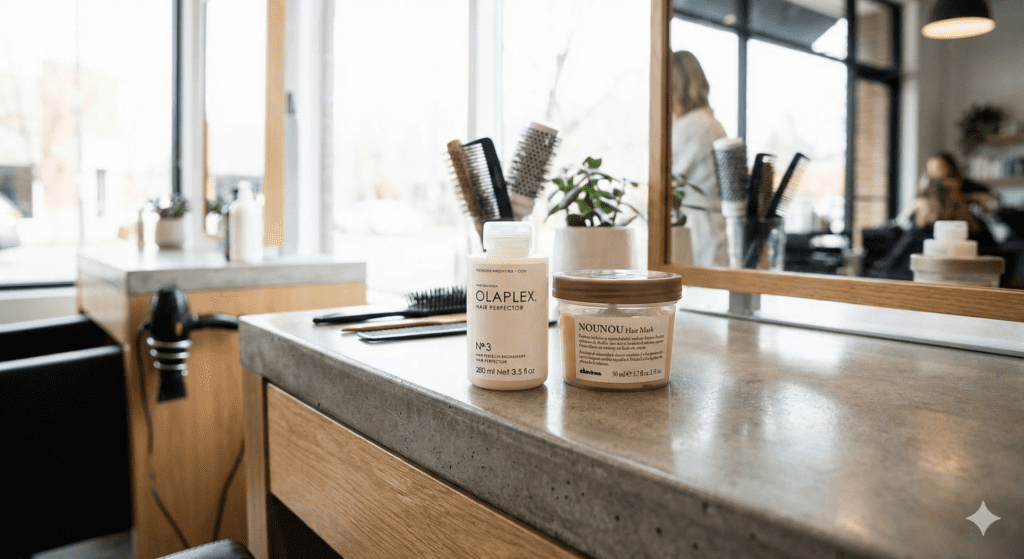
Most people get this wrong, they either add Olaplex when they do not need it, or they try to “fix” serious damage with a quick add-on and then feel disappointed. The difference is simple, it comes down to timing and how compromised your hair is.
What an Olaplex bolt-on is
A bolt-on is when Olaplex is added to another service you are already booking, most commonly colour, lightening, highlights, or balayage. This is usually the best value option because it supports the hair during a process that can weaken it.
Choose a bolt-on if:
- You are colouring, bleaching, lightening, highlighting, or toning
- Your hair is generally fine, but you want extra protection and better condition after colour
- You want a smoother, shinier finish and easier styling after your service
If you are booking colour, start on our women’s colour services page, then book your colour appointment.
If you are booking balayage and want everything included, you can book the Balayage + Toner + Olaplex package, or browse options on our balayage and ombré page.
What a stand-alone repair appointment is
A stand-alone appointment is when the main purpose of the visit is strengthening and restoring the hair, not colour. This is the right move when your hair is already in a compromised state and needs attention before you ask it to handle more processing or frequent heat styling.
Choose a stand-alone approach if:
- Your hair feels stretchy or gummy when wet
- You are getting breakage through the mid-lengths, not just dry ends
- Your hair snaps easily when brushing, or you are seeing lots of short broken hairs
- You have had repeated lightening and the texture now feels rough or straw-like
If you are unsure what camp you fall into, the smartest next step is a consultation, because it stops you spending money in the wrong direction. You can book a colour consultation.
The simple decision rule
- Booking colour or balayage today? Add Olaplex to that appointment; it is the best time to protect the hair while it is being processed.
- Not colouring, but the hair is breaking or stretching? Prioritise repair first, then maintain, then colour.
- Want a noticeable “feel good” upgrade with a cut? The easiest combined option is Ladies Cut and Blowdry with an Olaplex Treatment.
If you want, I’ll move on to the next section, “Olaplex Bonding Treatment: Who It’s Best For”, and I’ll keep it consistent with this conversion-first style.
Olaplex Bonding Treatment: Who It’s Best For
A bonding treatment makes sense when your hair’s main problem is weakness and breakage, not just frizz or dryness. If your hair is snapping, feels rough after colouring, or won’t behave even when you condition it properly, a bonding-focused service is usually the right call.
This is best for you if…
1) You colour or lighten your hair regularly
If you’re booking any chemical service, bonding support is most valuable during the appointment itself. It helps reduce that “straw-like” feel after lightening and can leave the hair noticeably easier to manage.
To keep it simple, start with our women’s colour services and then book your colour appointment.
If balayage is your thing, you can browse our balayage and ombré options, or choose the all-in appointment and book Balayage + Toner + Olaplex.
2) Your hair is breaking, especially through the mid-lengths
Dry ends are common, but breakage through the mid-lengths is a stronger sign the hair has been compromised. If you’re seeing lots of short broken hairs, or your hair snaps when brushing, a bonding treatment is more relevant than another random mask.
If you want the most noticeable “repair + refresh” in one visit, you can book Cut + Olaplex and see our full women’s haircuts and styles list.
3) You heat-style often and your hair feels rough, frizzy, or brittle
If you blow-dry or straighten several times a week, your hair can become brittle over time. A bonding treatment can improve how the hair feels and styles, but only if you also protect it properly. If you keep blasting high heat with no protection, you’re paying to patch a problem you keep recreating.
4) Your hair feels “stretchy” when wet
That gummy, elastic feel is one of the clearest signs your hair needs strengthening support. In that situation, guessing with products at home is usually slower and more expensive than getting the right treatment plan in salon.
If you’re not sure what your hair needs, the quickest route is a consult, you can book a colour consultation.
This is probably not for you if…
- Your hair is mainly dry, but not snapping or stretching
- Your issue is build-up, dullness, or hard water, not weakness
- You are expecting it to repair split ends, only a trim can do that
The simple takeaway
If you’re doing colour or balayage, bonding support is usually worth adding as the bolt-on, because that’s when your hair needs it most. If your hair is already breaking or stretchy, treat it like a repair plan, not a one-off add-on.
Next section to write is the chelating/reset option, this is the one that people confuse with “damage” all the time.
Olaplex Chelating Treatment (Broad Spectrum): Hard Water, Swimmers, Build-Up
This is the part most people misunderstand. Sometimes your hair does not feel bad because it is “damaged”, it feels bad because it is coated. Minerals from hard water, chlorine from swimming, plus heavy styling products, can build up on the hair and stop it from behaving normally.
When that happens, even good treatments can feel like they are “not working” because they are trying to treat hair that is covered in residue.
What a chelating or “reset” treatment actually does
A professional chelating or reset treatment helps remove mineral deposits and product build-up so the hair feels cleaner, lighter, and more responsive. It can bring back shine and softness quickly, and it often improves volume at the roots because the hair is no longer weighed down.
Signs you need chelating, not “more repair”
If any of these are true, a reset may be the smarter first move:
- Your hair feels dull or heavy even after washing
- Your roots get greasy fast, but your ends feel dry
- Your hair feels coated, sticky, or squeaky in a strange way
- Products stop working, your usual mask does nothing
- Your blonde looks flat or brassy quickly
- You swim regularly, or you live in a hard water area
- Your hair refuses to hold a blowdry, it goes limp or puffy straight away
Who it’s best for
Hard water clients
Mineral build-up can make the hair feel rough, dry, and lifeless, even when you are doing “all the right things”.
Swimmers
Chlorine and pool chemicals can leave hair brittle and dull, and blonde tones can shift faster.
Anyone who uses a lot of styling product
Dry shampoo, hairspray, oils, creams, plus heat styling can create layers of build-up that regular shampoo does not properly shift.
How to book it the smart way
Chelating is often best as part of a plan, not a random add-on.
If you’re booking colour or balayage:
A reset beforehand, or built into your colour journey, can help your colour apply and tone more predictably, because you are working with clean hair. Start by exploring our women’s colour services or our balayage and ombré options. If you want the simplest “all in” option, you can book Balayage + Toner + Olaplex.
If you’re not sure what you need:
Do not guess, book a consult and we’ll tell you whether your hair needs chelating first or straight into strengthening. You can book a colour consultation.
The simple rule
If your hair feels weak and snaps, bonding support matters.
If your hair feels dull, heavy, or “coated”, chelating often needs to happen first, otherwise you are treating through build-up.

Adding Olaplex to Colour Services: Who Should Always Get the Bolt-On
If you are paying for colour, highlights, or balayage, adding Olaplex is often the smartest upgrade because it supports the hair during the part of the appointment that can cause the most stress. The key is using it for the right clients, not selling it to everyone.
You should strongly consider the Olaplex bolt-on if any of these apply
1) You are lightening your hair, especially blonde work
Lightening is where hair is most likely to feel rough, fragile, or “straw-like” afterwards. If you want your colour to look good and your hair to still feel good, this is the moment Olaplex earns its keep.
Browse women’s colour services and book your hair colour appointment (from £85).
2) You are booking balayage
Balayage is still lightening, and it can be more demanding than a standard colour service. If you want the simplest “done properly” option, choose the package where Olaplex is already built in.
Explore balayage and ombré options or book the Balayage + Toner + Olaplex package (from £270).
3) Your hair has a history of damage
If you have previously over-lightened, had breakage, or your hair feels stretchy when wet, you should treat Olaplex as protection, not a luxury. It is cheaper to protect hair during colour than to try repairing it later.
4) You have fine hair, or you notice breakage easily
Fine hair often shows damage faster, even when the colour looks great. If your hair tends to snap, fray at the ends, or feel weaker after appointments, the bolt-on is usually a good call.
5) You heat-style often
Colour plus frequent heat styling is a common damage combo. If you blow-dry or straighten regularly, adding protection during colour helps your hair cope better between appointments.
When you can probably skip Olaplex
- Your hair is largely virgin, and you are doing a low-impact service with minimal lift
- Your main issue is dryness with no breakage, you likely need moisture and a trim more than bond support
- Your hair feels dull and coated rather than weak, you may need a reset or chelating approach first
If you are unsure, do not guess, it is exactly what causes wasted spend. Start with the free colour consultation, then we’ll recommend whether an Olaplex bolt-on makes sense for your hair.
Which Olaplex Is Best for Bleached or Highlighted Hair?
If your hair is bleached, highlighted, or lightened in any way, the most impactful use of Olaplex is usually in-salon during the chemical service itself, when the hair is under the most stress.
The best choice for most blondes
Add Olaplex to your colour appointment.
If you are booking highlights, a full head colour, a toner, or any lightening service, adding Olaplex is the simplest way to help your hair feel softer and stronger after the service.
You can browse our women’s colour services and then book your hair colour appointment.
If you are doing balayage or heavier blonde work
Balayage is still lightening, and it can be more demanding than a standard colour service. If you want the easiest “done properly” option, book the package where Olaplex is already included.
Explore our balayage and ombré options or book the Balayage + Toner + Olaplex package.
If your highlights are a top-up, for example a T-section
If you are maintaining highlights and want protection plus a polished finish in one appointment, book a highlight top-up service and add Olaplex if recommended in consultation.
You can book Root Tint / T-Section highlights with Cut and Blowdry.
When a bolt-on is not enough
If your hair is already compromised, for example it feels stretchy when wet, snaps during brushing, or feels rough no matter what conditioner you use, you may need a repair-first plan rather than “just add Olaplex” to colour. In those cases, a trim plus treatment is often the fastest reset because you remove the worst ends and improve how the hair behaves.
You can book Ladies Cut and Blowdry with an Olaplex Treatment.
A quick blonde decision rule
- Lightening today, highlights, balayage, or toner? Add Olaplex as the bolt-on.
- Hair is breaking or stretchy? Treat it as repair first, then colour.
- Hair feels dull or coated, especially if you swim or have hard water? Consider a reset approach first, then repair.
If you are unsure which camp you’re in, stop guessing and start with a consult, you can book a colour consultation.
If you want, I’ll move on to the next section, “Which Olaplex Is Best for Heat-Damaged Hair?”, and keep the same booking-led approach.
Which Olaplex Is Best for Heat-Damaged Hair?
If your hair has true heat damage, the best Olaplex approach depends on whether the problem is structural breakage or surface dryness and porosity. Heat damage often looks like frizz that will not smooth, ends that feel crunchy, and hair that refuses to hold a style unless you keep adding more heat. That becomes a cycle, and the hair gets worse.
Signs your hair is genuinely heat-damaged
- Ends feel stiff or crunchy, especially after blow-drying or straightening
- Hair frizzes immediately after styling, even when you have used products
- Hair looks dull and rough, and tangles easily
- You are getting split ends faster than normal
- Hair snaps during brushing or when detangling
If you are seeing snapping and short broken hairs, a strengthening treatment is relevant. If you are mostly seeing frizz with no breakage, you may need hydration and technique changes first.
Best salon option for most people with heat damage
If you want a noticeable improvement in feel and manageability, a simple upgrade is a professional blowdry combined with treatment. It improves the finish straight away and helps you feel the difference, which matters if you are trying to get out of the “more heat fixes it” habit.
You can book Blowdry + Olaplex Moisture Mask.
If heat damage is causing breakage
If your hair is snapping, or it feels weak and stretchy, you need a repair focused approach, not just a smoothing finish. The quickest route is often a trim plus treatment, because split and frayed ends keep travelling up the hair shaft if you ignore them.
You can book Cut + Olaplex and browse our full women’s haircuts and styles list.
The uncomfortable truth about heat damage
No treatment will outwork bad habits. If you keep using high heat several times a week with poor protection, any salon treatment becomes a temporary plaster.
If you want results that last, follow these rules:
- Use a heat protectant every single time
- Lower the temperature, most hair does not need maximum heat
- Do fewer passes, slow and controlled is better than multiple quick passes
- Keep your ends trimmed, because damaged ends do not “heal”
When heat damage is mixed with colour damage
If your hair is both coloured and heat styled frequently, adding Olaplex to your colour appointments is usually the smartest way to stop the damage stacking up over time.
Start with our women’s colour services and then book your colour appointment.
Quick decision rule
- Heat damage with breakage? Book a cut plus treatment, then fix the routine.
- Heat damage with frizz but no snapping? Prioritise hydration and smoother styling, then consider strengthening if needed.
- Heat damage plus regular colouring? Add Olaplex to colour services to protect the hair at the most stressful point.
Next section is “Which Olaplex Is Best for Dry Hair vs Dry Damaged Hair?”, this is where most people waste money because they misdiagnose the problem.
Which Olaplex Is Best for Dry Hair vs Dry Damaged Hair?
This is where most people waste money, because “dry” is a symptom, not a diagnosis. Dry hair can be thirsty, it can be coated in build-up, or it can be genuinely damaged. Each needs a different approach.
Dry hair, what it usually means
If your hair feels rough but it is not snapping, not stretchy when wet, and it improves noticeably after conditioner or a mask, you are likely dealing with dehydration and routine issues, not serious structural damage.
Common causes include:
- Over-washing or using harsh shampoo too often
- Frequent heat styling with weak protection
- Not using a proper mask regularly
- Hard water build-up making hair feel rough and dull
If you want the quickest visible improvement, a professional blowdry plus the right treatment can make hair feel softer and look shinier straight away. You can book Blowdry + Olaplex Moisture Mask.
Dry damaged hair, what it looks like
Dry damaged hair is usually high-porosity hair with internal bond damage, meaning moisture escapes quickly, and the hair struggles to retain strength.
- Hair snaps when brushing or detangling
- You have lots of shorter broken hairs
- The ends look thin and frayed, even after styling
- Hair feels stretchy, gummy, or weak when wet
- The texture has changed after bleach or colouring, it feels straw-like
If this is you, moisture alone will not solve it. You need strengthening support, plus a trim to remove the worst ends, because split ends and frayed ends keep travelling.
You can book Cut + Olaplex and browse our women’s haircuts and styles options.
If “dry” is actually build-up
Some hair feels dry because it is coated, especially with hard water or heavy product use. It can feel rough, dull, heavy, and it does not respond to masks properly.
If you recognise that pattern, a chelating or reset approach often needs to happen first. Once the hair is clean, it responds far better to repair and moisture.
If you are unsure what you need, stop guessing and book a colour consultation, we can tell you quickly whether you need hydration, repair, or a reset.
The simple decision rule
- Dry but not snapping? Prioritise hydration and routine changes, use treatments for softness and manageability.
- Dry plus breakage or stretchiness? Prioritise strengthening and trims, then maintain properly.
- Dry plus dull, coated hair that never feels clean? Start with a reset or chelating approach.
If your dryness is linked to colour services
If you notice dryness spikes after colouring or lightening, adding Olaplex to your colour appointment is usually a smart bolt-on, because it helps the hair cope during the most stressful part of the process.
Start with our women’s colour services and book your colour appointment.
Next section is “Which Olaplex Is Best for Breakage and Split Ends?”, this is where we draw a clear line between what treatments can improve and what only a cut can fix.
Which Olaplex Is Best for Breakage and Split Ends?
First, the truth most people avoid: split ends cannot be repaired. No treatment, not Olaplex, not masks, not oils, can glue a split end back together permanently. Treatments can make the hair feel smoother for a while, but the split will keep travelling unless it is cut off.
Breakage is different. Breakage can often be reduced with the right plan, and that is where Olaplex can be worth it, not by repairing broken strands, but by strengthening new growth and preventing further snapping
Step 1: Split ends or breakage, which is it?
You likely have split ends if:
- The ends look frayed, forked, or wispy
- Hair tangles badly at the tips
- The last few inches look thin, even when styled
- You get knots that turn into snaps during brushing
You likely have breakage if:
- You are seeing lots of short broken hairs throughout the hair, not just at the ends
- Hair snaps during brushing, especially mid-length
- You notice broken pieces on your clothes or sink
- Your hair feels weaker after colouring or heat styling
If you have split ends, a trim is non-negotiable. If you have breakage, strengthening support is usually worth considering.
Step 2: What actually helps
If your main issue is split ends
Book a cut first, then decide if you also need a treatment. This is the quickest way to get your hair looking healthier, because the worst ends are removed and your hair instantly behaves better.
You can explore our women’s haircuts and styles and book Cut + Olaplex if you want the repair and refresh combo in one appointment.
If your main issue is breakage
A bonding treatment is usually the better place to spend money, because the goal is to reduce snapping and improve strength. This is especially true if breakage followed lightening, colouring, or frequent heat styling.
If you are colouring or lightening today, Olaplex is best used as the bolt-on during the service. Start on our women’s colour services page and then book your colour appointment.
If you are booking balayage, you can browse our balayage and ombré options or choose the all-in appointment and book Balayage + Toner + Olaplex.
Step 3: Stop the damage loop
Treatments help, but breakage only improves if you stop recreating it. Most breakage comes from one of these:
- Too much heat, too hot, too often
- Rough brushing, especially on wet hair
- Tight styles that pull the hair
- Over-processing from repeated lightening
- Skipping trims for too long
If you fix none of that, any result you get will be temporary.
Quick decision rule
- Split ends only? Cut first, treatments second.
- Breakage through the hair? Bond support plus routine changes.
- Breakage after colour or bleach? Add Olaplex during your colour service, it is the best timing for protection.
Next section is “How Much Does an Olaplex Treatment Cost?”, where we set expectations clearly and make it easy to book the right option.
How Much Does an Olaplex Treatment Cost?
At Image London, Olaplex is priced in a way that matches how clients actually book it, either as a smart bolt-on to an appointment they were already coming in for, or as part of a bigger package where hair needs protecting during lightening.
If you want the simplest “repair plus refresh” option, Cut + Olaplex starts from £95; it makes sense if your hair feels weaker but you are not booking colour today. You can book Cut + Olaplex directly, or browse the wider women’s haircuts and styles menu first.
If your hair feels dry, rough, or puffy after styling, Blowdry + Olaplex Moisture Mask starts from £55; it’s the “make my hair look better today” upgrade, and it’s ideal before events, nights out, or post-holiday hair. You can book Blowdry + Olaplex Moisture Mask in minutes.
If you want the all-in option where Olaplex is already built into the appointment, the Balayage + Toner + Olaplex package (below shoulders, includes cut and blowdry) starts from £270. This is the best value choice when your hair is being lightened and you cannot afford extra breakage. You can book the Balayage + Toner + Olaplex package, and it aligns with the options on our balayage and ombré page.
If you are not sure what you need, do not guess, it just wastes money. A free colour consultation will confirm whether you need a bolt-on during colour, a repair-first approach, or a reset for build-up. If you want to explore first, our women’s colour services page lays out the options clearly.

What Results to Expect (After 1 Visit vs After 3 Visits)
Most people judge Olaplex too quickly, or they book the wrong version for their problem, then blame the treatment.
After 1 visit, expect hair that feels smoother, less tangly, and easier to blowdry; you may notice less snapping, but you will not undo months of bleach or daily heat in a single session. If your main goal is a visible improvement in softness and finish, Blowdry + Olaplex Moisture Mask is usually the fastest win.
After 3 visits, results are typically more consistent when combined with sensible heat habits, trims, and proper home care. The hair generally holds its shape better, feels stronger when brushing, and looks healthier because the ends are not constantly breaking off. If your damage is mainly from colour or balayage, it is smarter to build Olaplex into the service, the Balayage + Toner + Olaplex package is the cleanest example.
If you want, I’ll separate “What Results to Expect” into its own H2 as per your outline, and then continue with “How to Maintain Results at Home (Without Wasting Money)”.
How to Maintain Results at Home (Without Wasting Money)
This is where most people sabotage their results. They do a good salon treatment, then go back to the same habits that caused the problem, and wonder why their hair feels rough again two weeks later. Maintenance is not about buying ten products, it’s about doing a few basics properly.
1) Stop recreating the damage
If you are using heat tools regularly, the biggest upgrade is not another treatment, it is heat control.
- Use a heat protectant every time you heat-style
- Lower the temperature, most hair does not need maximum heat
- Do fewer passes, one slow controlled pass is better than three quick passes
- Avoid heat on soaking wet hair, it increases damage risk
If you are colouring or lightening, treat protection as part of the plan, not an optional extra. That’s why adding Olaplex during your colour appointment makes sense, and why the Balayage + Toner + Olaplex package is a smart choice if you want everything done properly in one visit.
2) Do not skip trims, they prevent split ends travelling
Treatments can improve feel, but they do not permanently fix split ends. If you skip trims for too long, damage travels up the hair and you end up needing to lose more length later.
If you are due a tidy-up, start with the women’s haircuts and styles menu, or book Cut + Olaplex for a simple repair plus refresh combo.
3) Keep your wash routine sane
Over-washing and harsh shampooing is one of the quickest ways to undo good work.
- Wash as often as your scalp needs, not as often as your hair “can handle”
- Focus shampoo at the scalp, do not aggressively shampoo the ends
- Condition every wash, and use a mask consistently, not randomly
- Be gentle when detangling, especially when the hair is wet
4) Deal with build-up before you keep “treating” the hair
If your hair lives in hard water, you use a lot of styling products, or you swim, build-up can block everything else from working. If your hair feels dull, heavy, or coated, it may need a reset first.
If you are not sure whether your issue is damage, dryness, or build-up, a free colour consultation is the fastest way to get a correct plan rather than guessing.
5) The low-effort maintenance plan most people actually need
If you want a simple routine that works for most hair types:
- Book Olaplex as a bolt-on whenever you lighten or colour
- Keep trims regular so ends stay clean
- Protect from heat every time
- Use a mask consistently
- Reset build-up when hair starts feeling coated again
If you want a noticeable finish between colour appointments, booking a professional blowdry with treatment is an easy way to keep hair feeling and looking better. You can book Blowdry + Olaplex Moisture Mask when you want a quick upgrade without committing to a full colour service.
Mistakes That Make People Think Olaplex “Doesn’t Work”
Most “Olaplex doesn’t work” complaints come down to one of two things, people either use it for the wrong problem, or they undo the benefits with their routine. If you want results that actually last, avoid these common mistakes.
1) Treating dryness like damage
If your hair feels dry but it is not snapping, not stretching when wet, and it improves with conditioner, you probably need hydration and routine changes, not a bond-focused plan. Olaplex can still help some people, but it will not replace moisture.
If your hair needs a refresh plus softness, the simple upgrade is Blowdry + Olaplex Moisture Mask.
2) Skipping trims, then blaming the treatment
Split ends cannot be repaired. Treatments can temporarily improve the feel, but the split will keep travelling until it is cut off. If your ends look frayed or see-through, a trim is the fix, then treatment helps prevent further damage.
If you want the fastest improvement in how your hair looks and behaves, book Cut + Olaplex and check the full women’s haircuts and styles menu if you’re deciding what to book.
3) Using heat like nothing happened
This is the big one. If you go back to maximum heat, no protectant, and multiple passes, you are rebuilding the damage you just paid to reduce. Treatments help, but they do not cancel out bad habits.
If you are heat styling regularly, use a protectant every time, lower the temperature, and reduce passes. Without that, any improvement will be short lived.
4) Not adding it when it matters most, during chemical services
People often rely on home products after the fact, but the most powerful use of Olaplex is protection during colouring and lightening itself.. If you regularly colour or lighten, adding Olaplex during the service gives the best return.
Start with women’s colour services and book your colour appointment. For heavier blonde work, the cleanest all-in option is the Balayage + Toner + Olaplex package.
5) Ignoring build-up, hard water, or chlorine
Sometimes hair feels rough because it is coated, not because it is damaged. Hard water minerals, chlorine, and heavy styling products can block treatments from working properly. If your hair feels dull, heavy, or like product sits on top, you may need a reset first.
If you are not sure what you are dealing with, a free colour consultation will tell you quickly whether you need repair, hydration, or chelating.
6) Expecting one visit to undo months or years
If your hair is heavily bleached or repeatedly over-processed, think improvement and protection going forward, not a one-visit miracle. Most people notice the best results after a few consistent appointments, especially when Olaplex is used at the right time.
The simple takeaway
Olaplex works best when it matches the problem. If you want the biggest impact, add it during colour services, keep trims regular, protect from heat, and deal with build-up before you keep piling on treatments.

Olaplex Near Me: What to Ask a Salon Before You Book
Searching “Olaplex near me” is easy. Choosing the right appointment is the part people mess up, because they book what sounds good instead of what their hair actually needs. Use these questions to make sure you get results, not a generic add-on that changes nothing.
1) Is Olaplex being used as a proper treatment, or just a quick add-on?
Ask what the treatment is being used for, protection during colour, strengthening for damage, or improving manageability. If the salon cannot explain the purpose, you are paying for a label, not a result.
If you want Olaplex used at the point it matters most, start by choosing the service that creates the most stress on hair, colour and lightening. You can explore our women’s colour services or browse balayage and ombré options.
2) Will someone check whether I need repair, hydration, or a reset first?
This matters more than the product name. If your hair is coated in hard water minerals or heavy product build-up, a “repair” service can feel underwhelming because it’s working through residue. A good salon should be able to tell you quickly which category you fall into.
If you want a straight answer before committing, a free colour consultation removes the guesswork.
3) Should I add Olaplex to my colour appointment, or book it separately?
Most people benefit more from adding it during colour or balayage because that is when hair is under chemical stress. Stand-alone treatment makes more sense when the hair is already breaking or stretchy and you are not colouring today.
If you are booking colour, you can go straight to a colour appointment. If you are booking balayage and want the simplest all-in option, you can book the Balayage + Toner + Olaplex package.
4) What results should I realistically expect, and how do I maintain them?
If a salon promises “repair” without talking about maintenance, it is a red flag. Heat habits, trims, wash routine, and build-up control decide whether your results last.
If you want the easiest “maintenance appointment” that gives a visible difference in softness and finish, you can book a Blowdry + Olaplex Moisture Mask. If split ends are part of the problem, the cleanest reset is a Cut + Olaplex.
Quick booking shortcuts
If you already know your path, choose one of these:
- Book a colour appointment if you want Olaplex added during colour
- Book the Balayage + Toner + Olaplex package if you want everything included
- Book a Cut + Olaplex if hair is breaking and the ends need cleaning up
- Book a free colour consultation if you are unsure
Olaplex FAQs
Yes, when it matches the problem. Olaplex is most “worth it” when you are colouring, bleaching, highlighting, or booking balayage, because that is when the hair is under chemical stress and protection makes the biggest difference. If you are not colouring but your hair is snapping or feels stretchy when wet, it can still be worth it as part of a repair-focused appointment. If you are unsure what you need, a free colour consultation removes the guesswork.
Olaplex is typically best added to services that place the most stress on the hair, such as colour, lightening, highlights, and balayage. Start by browsing women’s colour services or balayage and ombré options, then book the service you want and request Olaplex during consultation if it is recommended.
If you are booking colour or balayage, a bolt-on is usually the smartest choice because it protects the hair during the service itself. If you are not colouring today but your hair is breaking, snapping, or feels gummy when wet, book a repair-focused appointment instead. A simple “repair plus refresh” option is Cut + Olaplex.
Yes, balayage still involves lightening, and that is where hair can start to feel rough, dry, or fragile afterwards. If you want the cleanest all-in option, choose the Balayage + Toner + Olaplex package, it is designed for clients who want colour and protection in one appointment.
No. Split ends cannot be permanently repaired by any treatment, they need trimming off. Treatments can make ends feel smoother temporarily, but the split will keep travelling until it is cut. If your ends look frayed or thin, start with a cut, then decide if you also need a strengthening boost. You can browse women’s haircuts and styles or book Cut + Olaplex.
Maybe, but dryness is not automatically damage. If your hair feels rough but it is not snapping or stretching when wet, you may get better value from hydration plus a tidy-up, and a smoother blowdry finish. If you want the fastest visible improvement without booking colour, Blowdry + Olaplex Moisture Mask is the simplest upgrade.
Not always. Hard water minerals, chlorine from swimming, and heavy styling products can coat the hair and make it feel dry, heavy, or lifeless. In that case, a reset or chelating approach often needs to happen before “repair” treatments feel effective. If you want a quick diagnosis without guessing, book a free colour consultation and we’ll advise what your hair actually needs.
It depends on your routine. If you heat-style frequently at high temperatures or skip trims, results will fade faster because you are recreating damage. If you protect from heat, keep trims regular, and avoid build-up, the hair tends to stay smoother and stronger for longer, especially when Olaplex is used consistently during colour appointments.
Most clients add it whenever they are lightening, highlighting, or doing balayage, because that is when it offers the most protection. If you are doing a low-impact colour service and your hair is healthy, you may not need it every time. If you are unsure, start with women’s colour services and ask during your appointment, or book a free colour consultation.
If you know what you are booking, choose the service first, then request Olaplex as the bolt-on where appropriate. For colour, you can book a colour appointment. For balayage with everything included, book the Balayage + Toner + Olaplex package. If you are unsure, the fastest route is a free colour consultation.
Yes. If you are not colouring but want a noticeable improvement in feel and finish, pair it with the right service. For a visible softness boost, book Blowdry + Olaplex Moisture Mask. If your hair is breaking or your ends need cleaning up, book Cut + Olaplex.
Final Verdict: Is Olaplex Worth It, and Which Option Should You Book at Image London?
laplex is worth it when it solves the right problem, and when it is used at the right point in your appointment. If you book it blindly, it can feel like an expensive extra. If you book it strategically, it is one of the easiest ways to protect hair during colour services and reduce breakage over time.
The simplest verdict by hair type and situation
If you are colouring, lightening, highlighting, or toning
Olaplex is usually worth adding as the bolt-on, because that is when your hair is under the most chemical stress. Start with women’s colour services and book your colour appointment.
If you are booking balayage
Choose the option where Olaplex is already built in, it removes guesswork and protects the hair during lightening. You can explore balayage and ombré options or book the Balayage + Toner + Olaplex package.
If your hair is breaking, snapping, or feels stretchy when wet
Treat it like a repair plan. A cut plus treatment is usually the fastest reset, because the trim removes the worst ends and the treatment improves how the hair behaves. Book Cut + Olaplex and browse women’s haircuts and styles if you are deciding what to choose.
If your hair is dry and frizzy, but not actually breaking
The issue is often porosity and dehydration rather than structural damage. If you want a visible difference quickly, book Blowdry + Olaplex Moisture Mask.
If your hair feels dull, heavy, or coated
Do not assume it is damage. Build-up from hard water, swimming, or styling products can block treatments from working properly. A reset approach may be needed before repair. The quickest way to diagnose this properly is a free colour consultation.
The final takeaway
If you want the best result for the least effort, add Olaplex during colour services and keep up with trims and heat protection. If you are unsure what your hair needs, do not guess, a consultation will save you money and stop you booking the wrong thing.