If your hair is damaged, breaking, dry or over-processed, you’ve probably been told to “use Olaplex” or “try K18”. Both treatments are marketed as hair repair solutions, but they work in very different ways and solve very different problems.
At Image London, we treat damaged hair daily across colour services, balayage and corrective work. We see the real causes of breakage, porosity and structural weakness, and we know when Olaplex is the right solution and when K18 is the better choice.
If you’re researching Olaplex specifically, our guide on Is Olaplex Worth It? explains how bond building works, who it is best for and when it genuinely delivers results.
This guide focuses on the real difference between K18 and Olaplex so you can book the correct treatment with confidence rather than guessing.
What is hair damage and why it matters
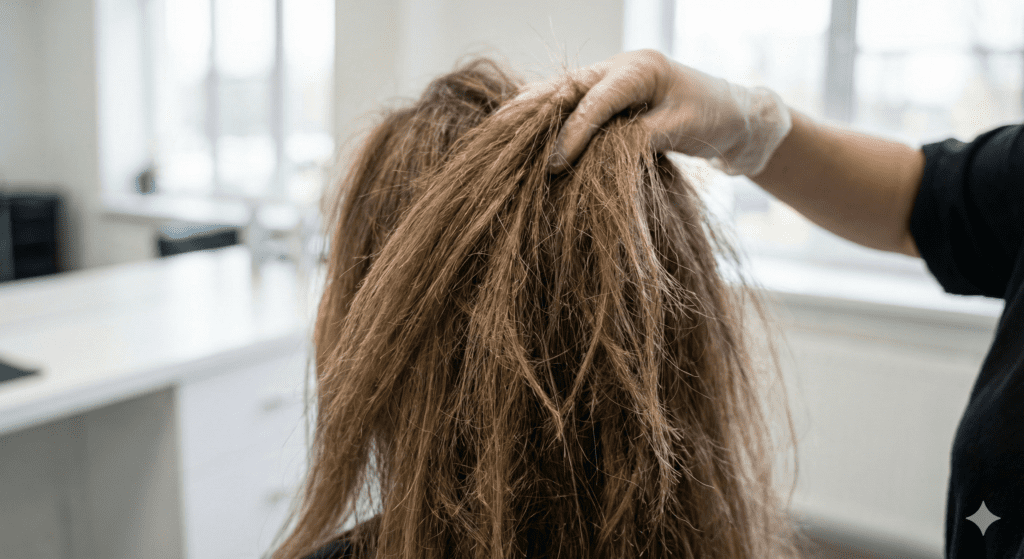
Hair damage occurs when the internal structure of the hair fibre becomes compromised through bleaching, colouring, heat styling, mineral build-up from hard water and over-processing.
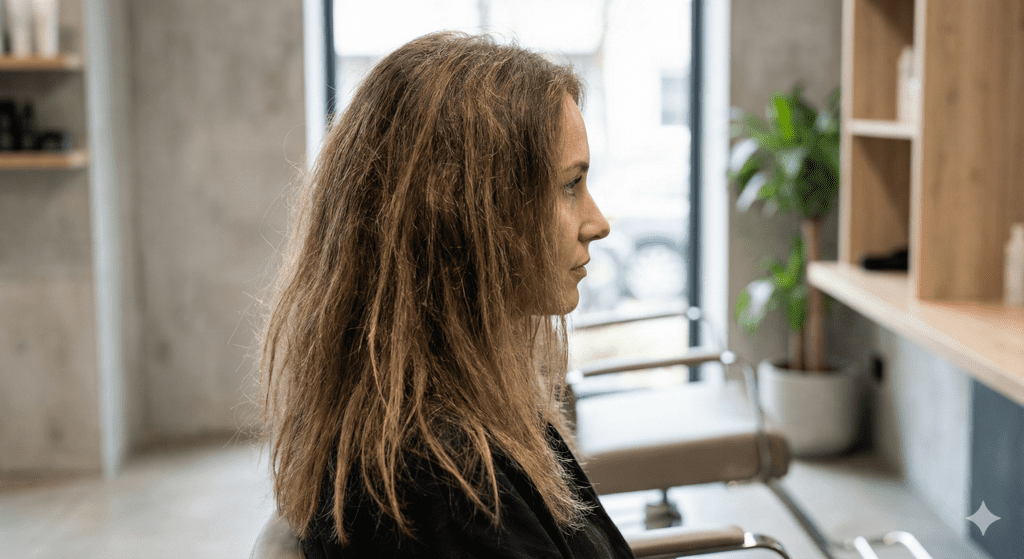
When hair becomes damaged, it often feels weaker, drier and more porous. Breakage increases, colour fades faster and styling becomes harder to control.
Not all damage behaves the same way. Some hair suffers primarily from broken bonds caused by chemical services, while other hair experiences deeper keratin breakdown and structural collapse.
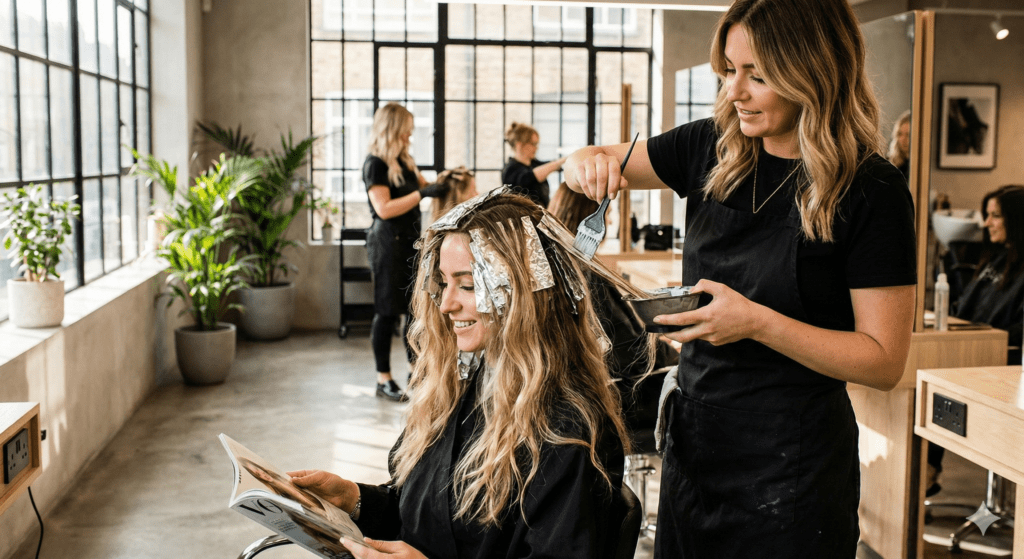
If your damage is linked to colouring or lightening, our hair colour services page explains how we protect hair integrity during chemical services, while our balayage and ombré services page shows how we manage lightening safely and sustainably.
What Olaplex actually repairs
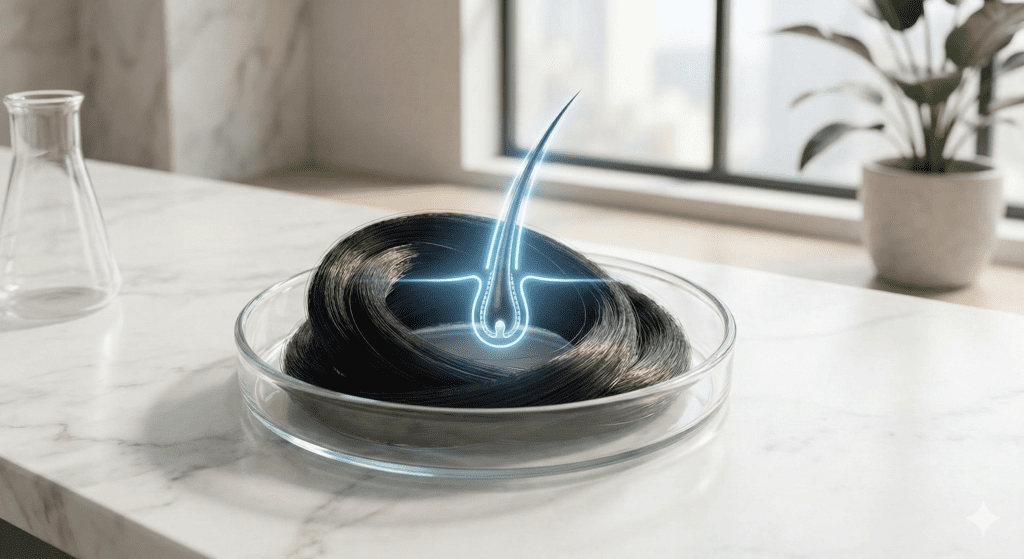
Olaplex is a bond-building treatment. Inside each hair strand are disulphide bonds that give hair its strength and stability. These bonds break during bleaching, colouring and repeated heat exposure.
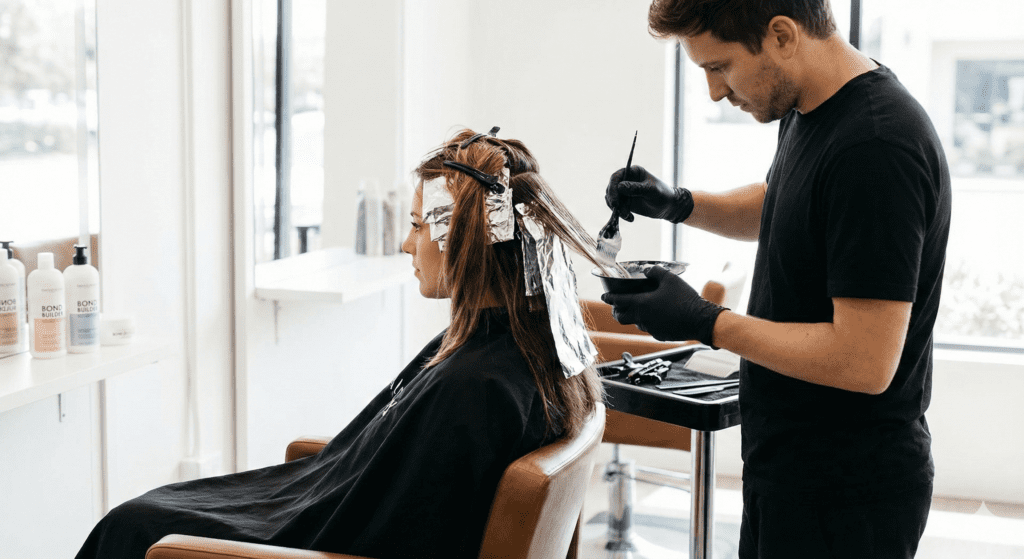
Olaplex reconnects these broken bonds inside the hair fibre, improving strength and reducing breakage. It is most effective when used professionally during colour and lightening services to protect the hair while chemical processing occurs.
Olaplex does not hydrate the hair or smooth the cuticle. Its role is purely internal bond repair rather than cosmetic conditioning.
For a full technical breakdown of how Olaplex works and when it makes sense to invest in it, read our in-depth guide on Is Olaplex Worth It?
How K18 repairs hair at a molecular level
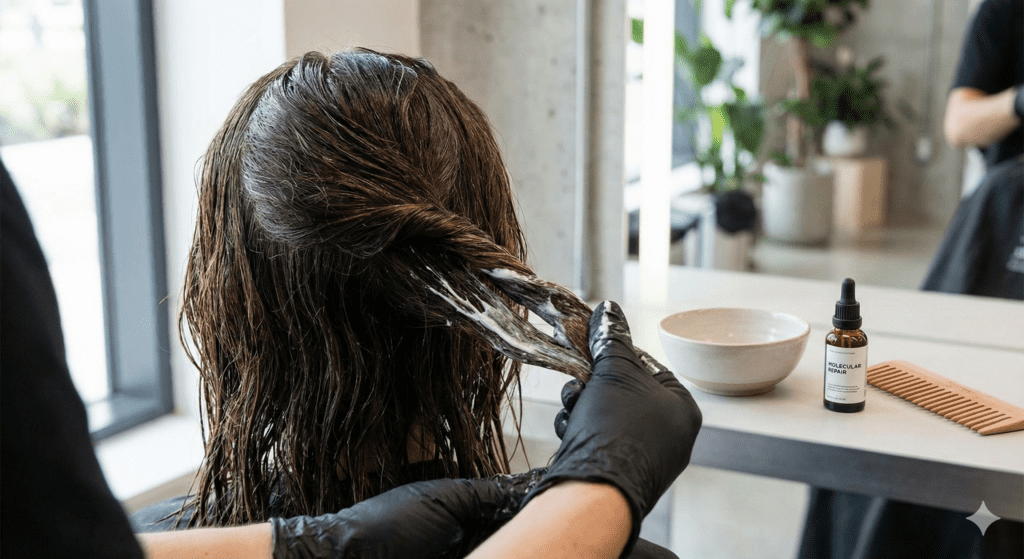
K18 is a molecular repair treatment that uses a biomimetic peptide designed to reconnect broken keratin chains inside the hair.
Keratin chains form the structural backbone of the hair fibre. When they degrade, hair becomes overly porous, stretchy when wet and unable to retain strength or moisture.
K18 repairs this deeper structural damage by reconnecting these chains internally. It is particularly effective for hair that feels gummy, weak or severely compromised after repeated bleaching or aggressive heat styling.
K18 is not a protein coating treatment and does not mask damage. It rebuilds the internal structure of the hair rather than temporarily smoothing the surface.
If you want the Image London comparison version of this topic, see our full guide on Is K18 Better Than Olaplex?
Is K18 better than Olaplex in real life?
Neither treatment is universally better.
Olaplex repairs broken disulphide bonds that weaken hair after chemical services. K18 repairs broken keratin chains that compromise the internal structure of the hair.
If your hair is primarily chemically damaged from colouring or bleaching, Olaplex is often the correct solution. If your hair is extremely porous, elastic or structurally weakened, K18 is usually the better option.
If you’re unsure, book a free 15-minute Hair Repair and Treatment Consultation and we’ll confirm the right pathway before you spend money on the wrong treatment.
The real difference between bond repair and molecular repair
Bond repair focuses on reconnecting broken links inside the hair that provide strength and resistance to snapping.
Molecular repair focuses on restoring the keratin framework that gives hair its internal shape, integrity and elasticity.
Both processes improve hair health, but they address different biological problems inside the hair fibre. Choosing the wrong approach often leads to limited improvement and wasted spend.
When Olaplex is the right choice
Olaplex is ideal when hair has been bleached, coloured, chemically processed or is snapping easily.
If you want to understand whether it’s genuinely worth it for your hair type, read Is Olaplex Worth It?
When K18 is the better solution
K18 is best for hair that feels excessively porous, stretchy when wet, fragile or unable to retain shape and moisture.
This type of damage often develops after repeated bleaching cycles, colour corrections or prolonged heat exposure where the hair’s internal structure has been compromised rather than just its bonds.
Yes, when prescribed professionally and applied in the correct order.
Some hair benefits from stabilising broken bonds first before introducing molecular repair once structural integrity improves. This sequencing depends entirely on hair condition and treatment history.
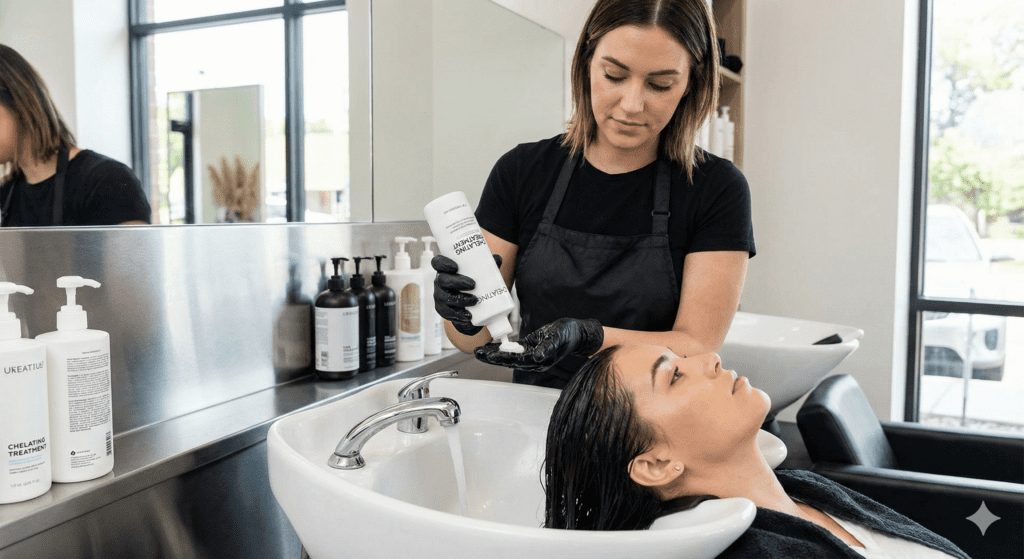
Mineral build-up from hard water, metals and product residue can coat the hair shaft and block repair treatments from penetrating properly.
Both Olaplex and K18 offer professional chelating systems designed to remove this build-up before repair treatments are applied. At Image London, we assess build-up during consultation and perform chelation where necessary to maximise treatment effectiveness and longevity.
If you colour regularly, start with the service pathway on hair colour services so your colour plan and repair plan work together.
How long do results last?
Both treatments deliver permanent internal repair, but longevity depends on heat exposure, frequency of chemical services, water quality and home care habits.
If your hair is regularly lightened, you’ll get better long-term results by aligning repair with your service plan through balayage and ombré servicesor hair colour services rather than treating repair as a one-off.
Our professional repair framework
At Image London, we follow a structured repair framework rather than selling standalone treatments.
First, we reset the hair using professional chelation when required. Second, we repair using Olaplex, K18 or a combined approach based on diagnosis. Third, we protect results through personalised home care and service planning.
If your hair is chemically damaged from colour or bleach, Olaplex is usually appropriate. If your hair is porous, elastic or structurally compromised, K18 is often the better choice.
If you are unsure which applies to you, a professional consultation removes uncertainty and prevents unnecessary spend. Book the free Hair Repair and Treatment Consultation and we’ll confirm your best pathway.
Neither is universally better. Each treats a different type of hair damage. K18 is usually better for extreme porosity and structural weakness, while Olaplex is often better for chemical bond damage caused by colouring and bleaching.
Yes, when prescribed professionally and applied in the correct order. If you want the right sequence for your hair, book the free Hair Repair and Treatment Consultation
Olaplex is commonly used during lightening services, while K18 may be recommended later if the hair becomes porous or structurally weak. If you’re exploring lightening services, start with balayage and ombré services
Book a free 15-minute Hair Repair Consultation and we’ll assess your hair, explain whether Olaplex or K18 is best, and map out the fastest route to stronger, healthier hair.